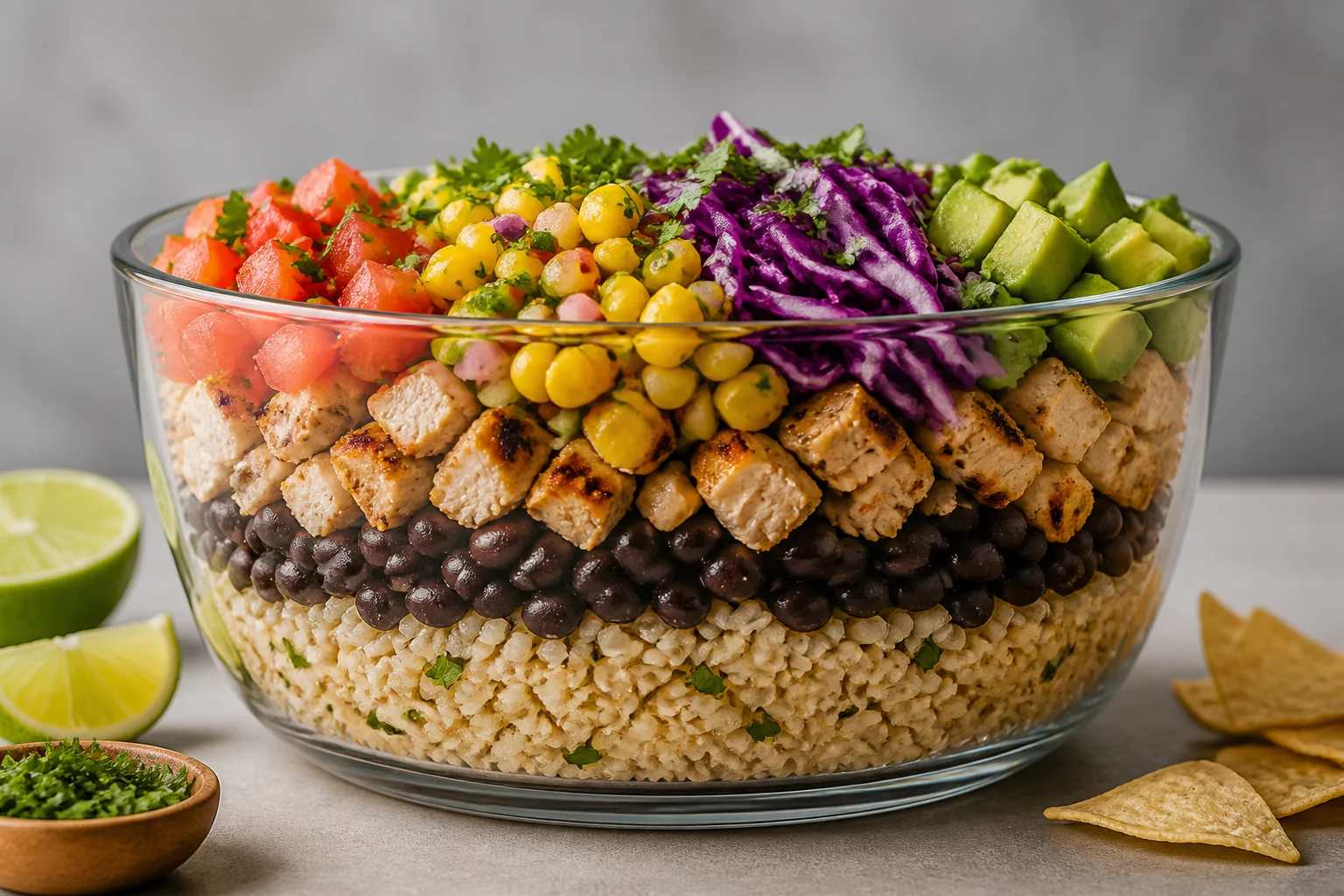
Building a meal bowl is an exercise in edible architecture. By layering flavors and textures strategically, you ensure that every forkful offers a balanced profile of richness, acidity, and crunch. This structural approach prevents ingredients from merging into a single, indistinct texture, keeping the palate engaged from start to finish.
The layering process begins with foundational depth and moves toward surface-level brightness. Proper construction prevents bottom layers from turning mushy under the weight of moist toppings.
When you look at a cross-section of a well-constructed meal bowl, it reveals a deliberate hierarchy. The bottom layer—typically grains or beans—serves as the moisture reservoir. In it, the seasonings from higher layers settle, creating a flavorful base that doesn't feel dry even when the sauces have been mostly consumed. This foundation provides the necessary caloric weight and temperature stability for the entire dish.
"A successful layer is one that protects the texture of its neighbor while contributing its own distinct profile to the collective profile of the bowl."
Middle layers usually consist of proteins and roasted vegetables. These are the "heart" of the meal, providing the primary savory notes. On top of these, we place the volatile components: fresh salsas, citrus squeezes, and crunchy toppings. These surface elements are meant to hit the tongue first, providing immediate acidity and physical resistance before yielding to the softer, warmer components below.
Specializes in textural profile tracking and balance methodology, documenting optimal combinations for modern casual dining environments.