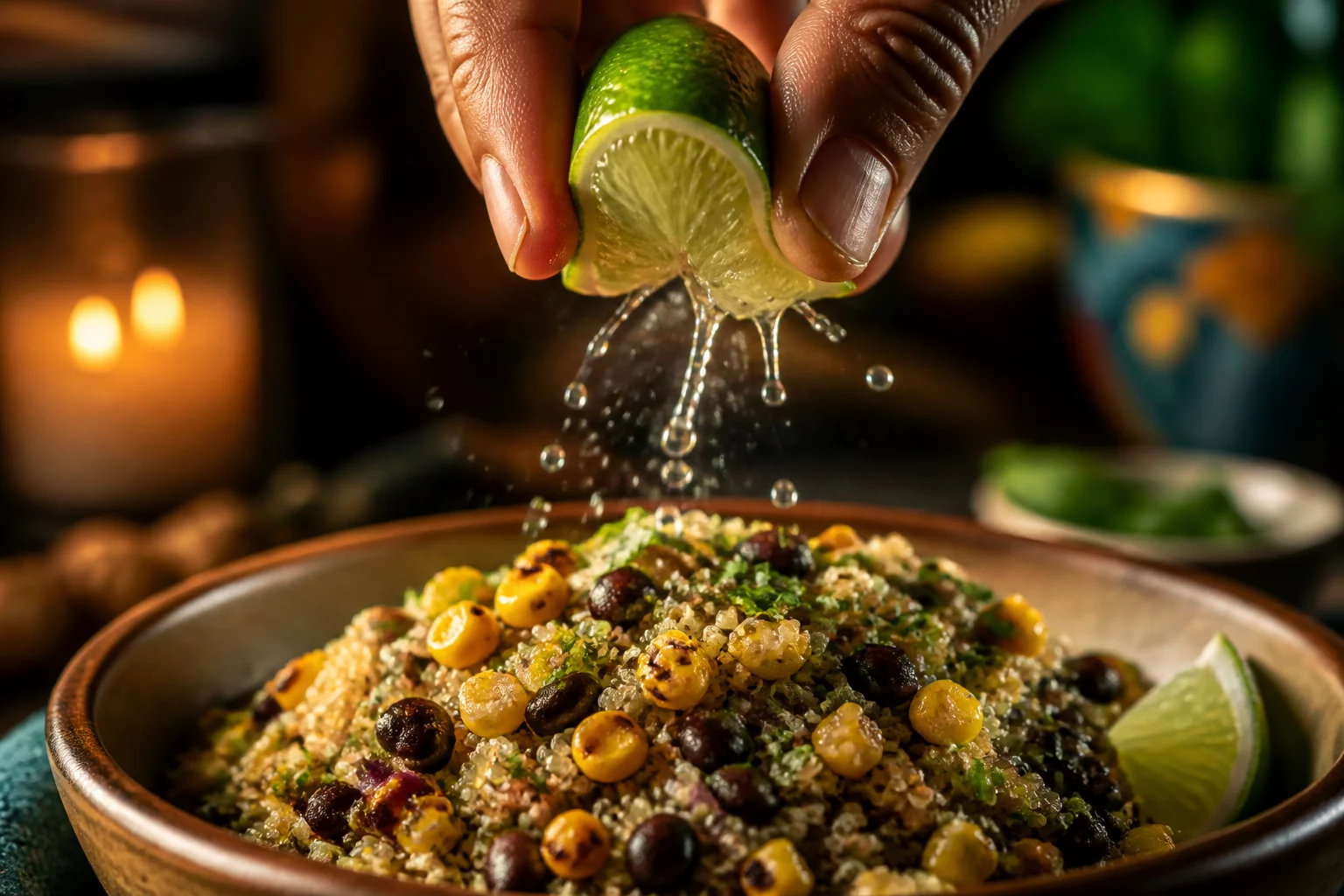
Acidity acts as the engine of flavor in a bowl, cutting through richness and brightening dull grains to provide a sharp contrast to soft textures. Achieving balance requires a tactical understanding of how liquid acids interact with dry bases and creamy fats to prevent the meal from becoming soggy or one-dimensionally sharp.
Acidity serves as a palate cleanser that allows individual ingredient flavors to stand out rather than blending into a single heavy mass.
Acidity serves as the 'high note' in any well-constructed meal bowl. It functions primarily to counterbalance heavy fats, such as shredded cheese or guacamole, and dense starches like black beans. Without it, a bowl often feels 'heavy' or 'muddy.' The secret lies in using varying formats—from fresh citrus juices to pickled vegetables and fermented salsas—to distribute brightness without compromising the structural integrity of the grains.
"Balance is achieved where dry components absorb excess liquid, while acidic elements release enough binding liquid to support a unified bite without saturation."
When building your meal, consider the 'Soggy Factor.' Liquid acids naturally travel downward toward the base. To prevent a grain slump, use flavor barriers. A layer of leafy greens or a smear of guacamole can shield the rice from direct contact with acidic liquids, preserving the fluffiness of the grains until the moment they are mixed. Consistency plays an important role in how we perceive the freshness of the meal.
We classify acidity into three physical roles within a bowl environment. The primary structure involves the light background notes found in seasoned rice. The secondary accents are the sharp spikes found in fresh salsa. Finally, the contrast builders are the crunchy, pickled elements that resist becoming soft even when buried under other toppings.
Focuses on the intersection of chemical acidity and physical texture, documenting how different vinegars and citrus impact grain structural integrity.