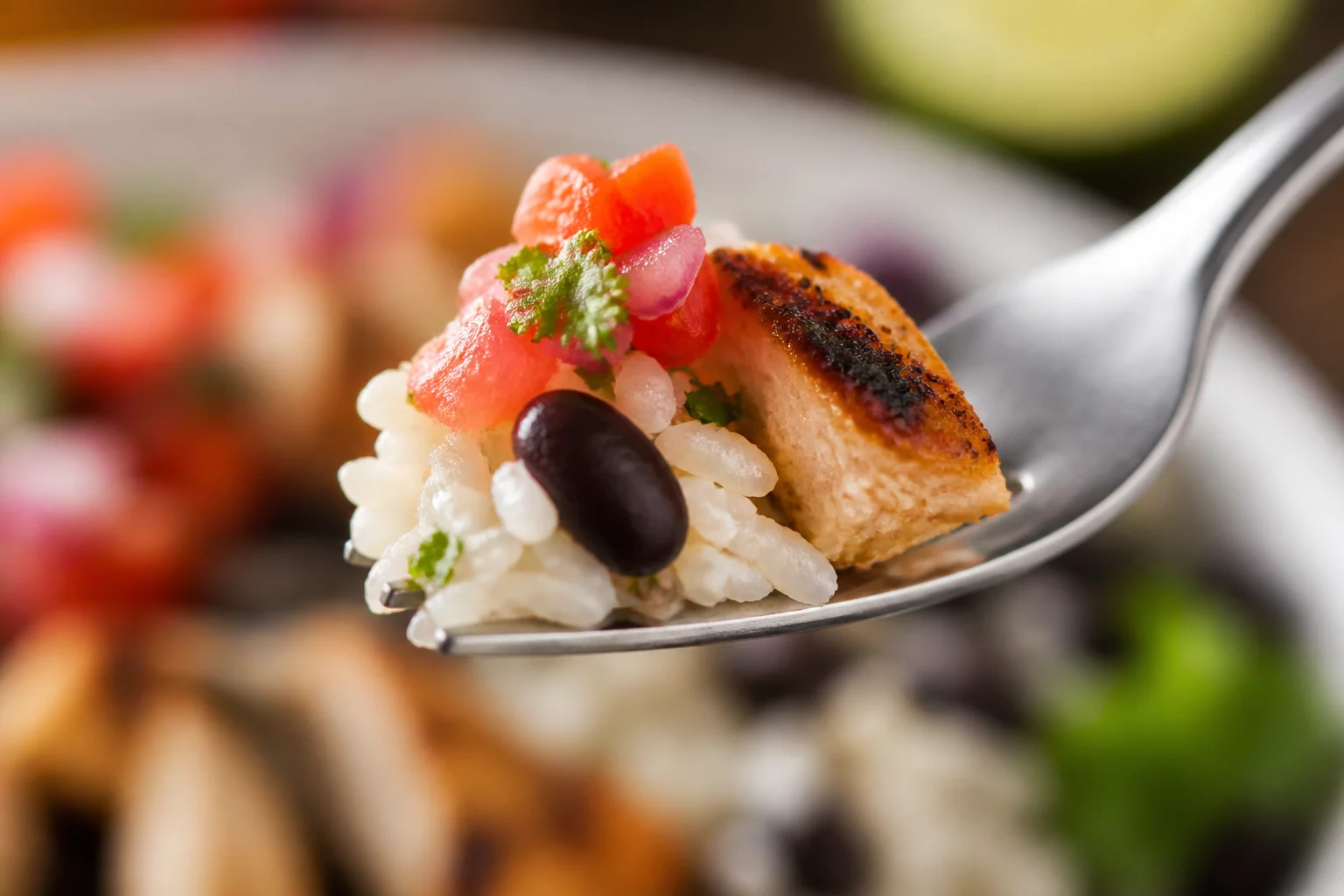
Every enthusiast of casual dining eventually realizes that satisfaction isn't found in the quantity of food, but in the quality of the individual mouthful. The "perfect bite" represents a meticulous assembly where the structural crunch of a tortilla strip meets the velvet smoothness of guacamole, all anchored by a savory protein. It is about proportion—ensuring no single ingredient dominates the experience, but rather that each forkful tells a complete story of the bowl's intended design.
The perfect bite serves as the benchmark for a successful bowl construction. It validates the prep work done on individual ingredients by showing how they function in unison.
The core of our analysis centers on the "Vertical Stack" methodology. Instead of viewing a bowl as a flat surface, we treat it as a multi-level construction site. The bottom layer—typically grains—serves as the shock absorber for liquid and weight. The middle layer houses the heavy proteins, providing the savory heart of the bite. Finally, the top layer provides the "spark"—the acidity of lime, the heat of peppers, and the cooling moisture of cream.
"A balance must exist. Where dry components absorb excess liquid, moisture elements must release enough binding liquid to support unified ingestion without saturation."
When these layers are sampled vertically, the tongue experiences a sequence: first, the bright acidity of the garnish, followed by the richness of the protein, and ending with the satisfying starch of the base. This sequence is not accidental; it is the blueprint for flavor longevity. If you mix everything into a paste, you lose the temporal aspect of the meal, where different flavors peak at different moments during mastication.
Furthermore, the temperature dynamics should not be ignored. A truly perfect bite often balances the heat of freshly grilled meat with the chill of a refrigerator-cold salsa. This thermal contrast keeps the palate engaged, preventing "taste fatigue" where the mouth becomes desensitized to a uniform temperature. By understanding these interactions, you can turn a standard meal into a deliberate exercise in culinary engineering.
Specializes in textural profile tracking and balance methodology, documenting optimal combinations for modern casual dining environments.