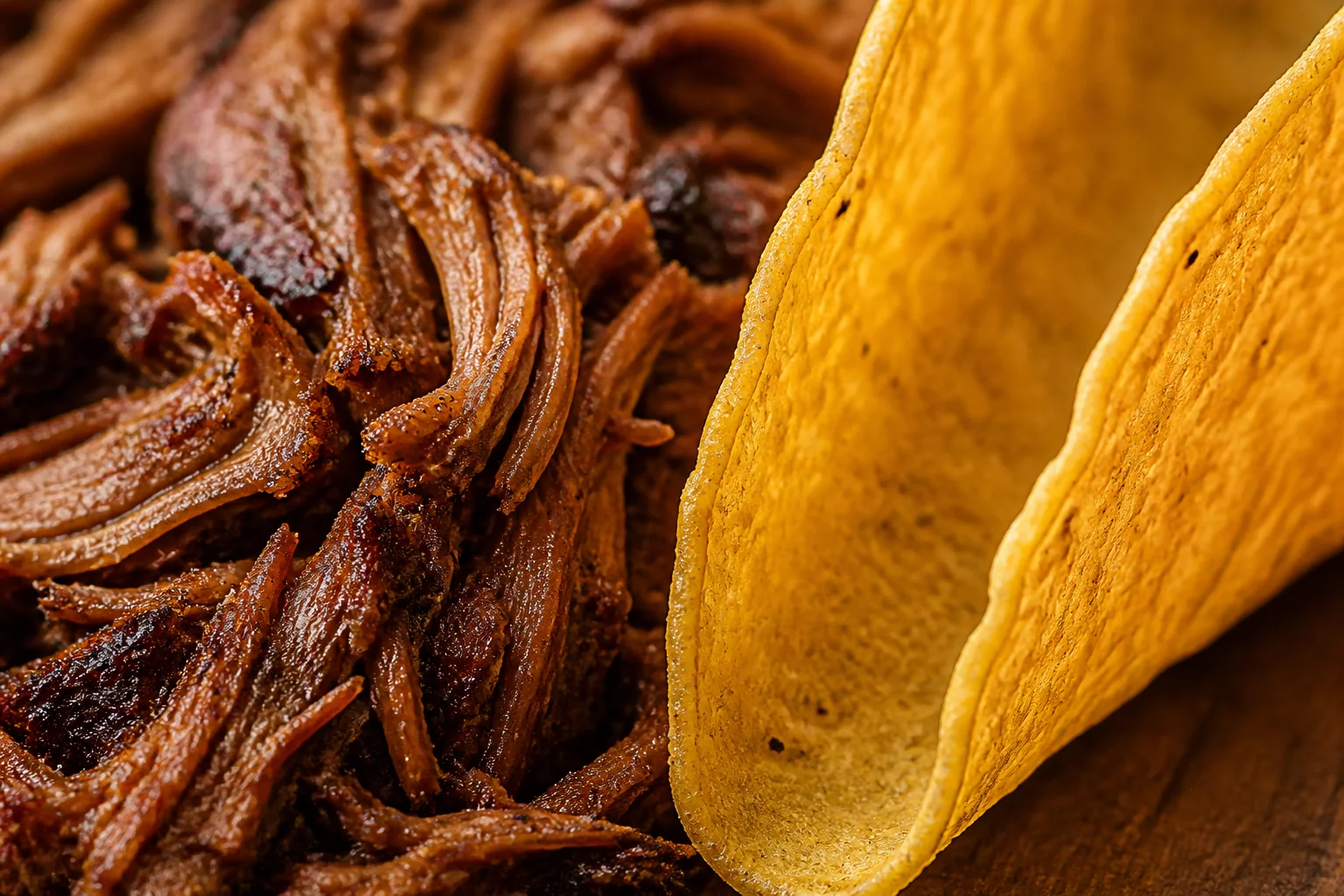
Bite mechanics play a crucial role in how we perceive flavor satisfaction. When chewy elements like tender carnitas or well-cooked beans meet the sudden resistance of crispy corn strips or raw vegetables, the brain stays engaged throughout the entire meal. This textural diversity prevents palate fatigue and ensures that every mouthful offers a fresh sensory experience, making the dish feel more substantial and intentionally built.
Texture is as important as taste. These two opposing forces create a structure that supports complex toppings without becoming mushy.
A meal that is entirely soft can feel heavy and boring, while a dish that is too crunchy can become tiring for the jaw. We view chewy elements, such as slow-cooked carnitas or well-prepared grains, as the foundational weight of the plate. These components hold the seasonings and provide the bulk of the caloric satisfaction. Without them, the meal feels incomplete and lacks a sense of 'grounding.'
"The secret to a memorable meal isn't in the spice level alone, but in the physical resistance each ingredient offers to the teeth. Contrast is the catalyst for flavor."
When selecting toppings, we look for items that break up the density of the base. This is where crispy elements excel. Their role is to provide a sharp, clean finish to a bite that might otherwise feel too rich or oily. We categorize these textures based on their physical impact:
To preserve this balance, it is vital to keep crispy items away from direct contact with highly liquid salsas until the moment of consumption. Otherwise, the 'crispy' becomes 'soggy,' and the textural harmony is lost, resulting in a monolithic experience that fails to excite the senses.

Avery specializes in the sensory science of fast-casual dining, focusing on how structural food choices impact consumer satiety and repeat purchase behavior.